Custom HomesOctober 19, 202611 min read
General Contractor vs Builder in Cookeville, TN: Who to Hire
A general contractor runs a design someone else created. A builder takes a new house from the land through construction. In Tennessee, either one needs a license at $25,000.
The difference between a general contractor and a builder comes down to scope. A general contractor runs construction on a design someone else created, hiring and scheduling the trades. A home builder takes a new house from the land and the design through construction and warranty. In Tennessee, either one needs a state contractor's license for projects of $25,000 or more.
Planning a new home around Cookeville? Contact us. Scott or Tonya Conner will personally get back to you, usually within a day or two, and set up a free consultation. You can verify our Tennessee contractor license, #71564, before you ever pick up the phone.
We're S&T Construction, a family-owned builder based in Cookeville since 2017. People ask us this question a lot, usually right after they've gotten one bid that looks nothing like another. Here's the plain-English version, plus what Tennessee law actually requires, so you can understand your options and make the right choice for your project.
What Is the Difference Between a General Contractor and a Builder?
A general contractor takes a project that's already designed and manages its construction. They bid the plans, hire subcontractors, schedule the work, and answer for the result. A builder, and a custom home builder in particular, tends to come in sooner to help with the land, the design, and the budget, then stays responsible for the house through the warranty.
Most people use the two words loosely, and that's fair. Plenty of custom home builders hold a general contractor's license, and plenty of general contractors build houses. So for homeowners, the label on the truck matters less than who is responsible for each part of the job:
- Who helps decide what gets built? A builder is usually involved before the drawings are final. A general contractor typically bids the blueprints you bring.
- Who manages the trades? Both do. That coordination is the core of the job.
- Who answers for the finished house? A builder generally owns the result from first conversation to warranty. A general contractor owns the construction scope in their contract.
The decision usually comes down to how complete your design is and how much help you want. One more thing worth knowing: timelines and quality depend more on planning and experience than on the title. A team that has built on property like yours will usually spot problems before they turn into delays.
What Does a General Contractor Do on a Home Project?
On a home project, the general contractor is the prime contractor. They sign the contract with the owner, pull the permits, and hire and schedule the subcontractors (framers, plumbers, electricians, HVAC, roofers). They also order materials, run job site safety, and line up inspections. Their job is to build what the drawings specify, on budget and on schedule.
General contractors are a great fit when the design work is already done. Think of a remodel drawn by an architect, a home addition with stamped plans, structural changes to an older house, or a commercial build. You hand over the drawings, collect bids, and hire the company that best matches your budget, timeline, and comfort level. Renovations in older homes also tend to uncover surprises behind the walls, and an experienced general contractor is used to handling them.
How they charge varies. Many general contractors work on a cost-plus basis, billing the cost of labor and materials plus a fee or a percentage markup. Others offer a fixed price on complete drawings. Ask every bidder which way they charge and how that would affect your costs if the scope shifts.
Trouble usually starts with gaps in the drawings. Say the set never names a cabinet line or a window package, or never shows how the foundation deals with a sloped lot. Each bidder will guess differently, which is how two bids on the same house can land so far apart. Those missing details also tend to turn into costly change orders.
What Does a Custom Home Builder Do?
A custom home builder takes responsibility for the whole new home construction process: evaluating your lot, developing or adapting the design, pricing real selections, managing permits and trades, and standing behind the finished home. You get one team accountable from the first conversation to the final walkthrough and beyond.
At S&T, it works like this. Your first call goes to Scott or Tonya. Scott then walks your lot and comes back with a transparent plan: real drawings, real selections, and a real number for each one. You won't get vague allowances that become surprise change orders down the road. If you already have drawings from an architect or plan service, we build from those. If you're starting from scratch, we connect you with a designer we trust.
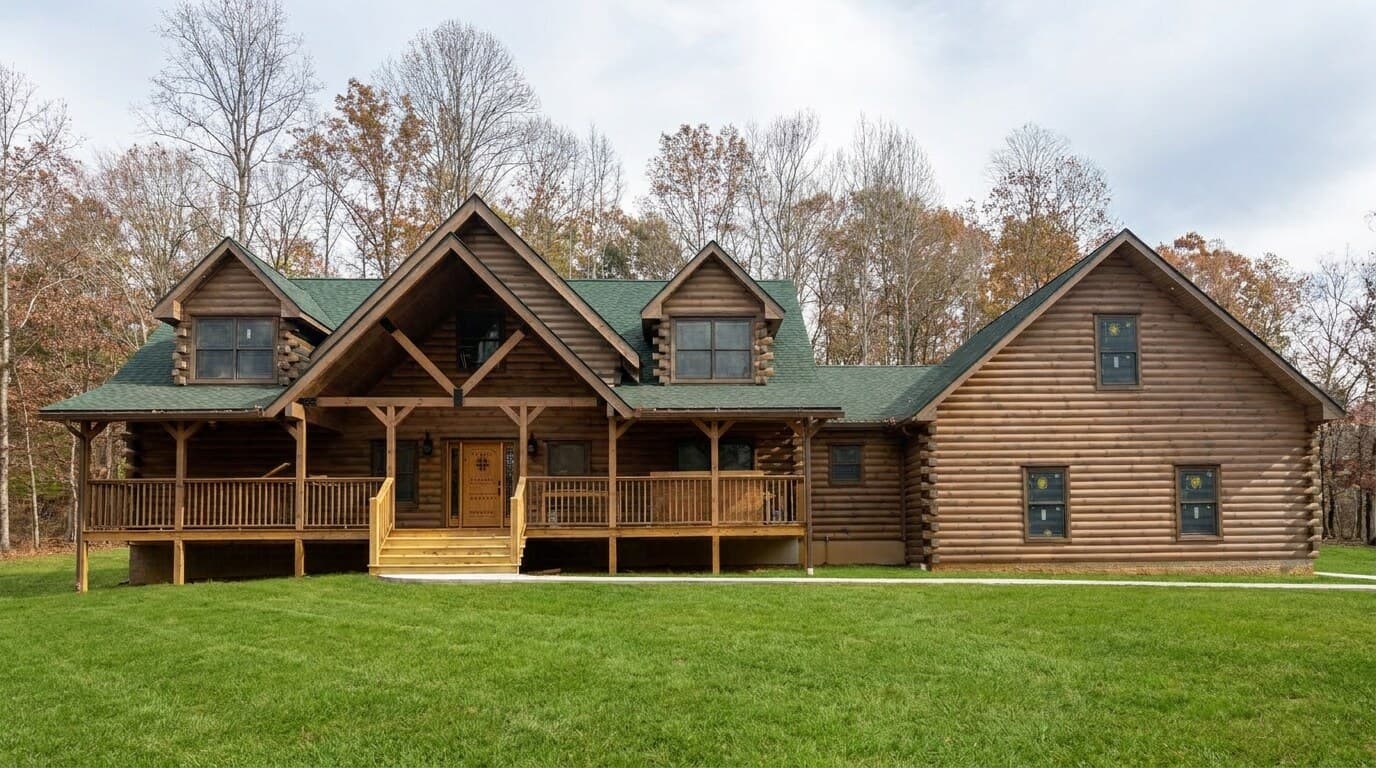
After the contract is signed, Scott leads the hands-on build while Tonya keeps the schedule and paperwork tight, and you walk the house with us every week. We finish with a detailed final walkthrough, a punch list, and a written warranty. In practice, that's what separates a builder: a year later, when a door starts sticking, we're still the ones you call. You can see the kind of homes we build on our custom homes page.
Getting involved early helps in two ways. First, the things that squeeze a budget (rock, a long driveway, a septic system on tricky land) come to light while the design can still change. Second, communication stays simple, since the people who plan the house are the same people who build it.
How Do a Builder and a General Contractor Compare Side by Side?
They share a lot: each one manages trades and needs a Tennessee license for projects of $25,000 or more. The difference is the starting point. A builder starts with the land and the idea, then prices one design with real selections. A general contractor usually bids exactly what's on finished blueprints. On a new custom home, starting early matters.
One isn't always cheaper than the other. A builder's price can look higher at first because it covers things a bare bid skips, such as site work assumptions and actual finish selections. Line up what each price includes instead of just the total, and pick the team whose quality and construction experience fit your project.
How Does Design-Build Compare to a General Contractor?
With design-build, one company and one contract cover both design and construction, so the designer and builder work as a team. The traditional general contractor route means hiring an architect first, then putting the finished drawings out to bid. Design-build is often quicker and keeps the price tied to the design, but you'll get fewer competing bids.
People also ask whether design-build is more expensive. Not necessarily. You're not paying for a second round of redesign when bids come in over budget, which is a common problem with the bid-the-plans approach. The main disadvantage is that you're choosing your builder early, so you need to trust them before you see a final number.
S&T works both ways. If you're starting from scratch, we connect you with a designer we trust and work through the planning together. If you already have drawings, we're just as comfortable building from those. Either way, we won't break ground until the plan is something you're genuinely excited about and a budget you can stand behind.
Does Tennessee Require a Contractor's License to Build a House?
Yes. Tennessee requires a state contractor's license before anyone contracts, bids, or negotiates a price on a project of $25,000 or more, including materials and labor. That applies to prime contractors on a new house. Some subcontractors, like electrical, plumbing, HVAC, and roofing, also need their own license when their portion reaches $25,000.
A few more Tennessee rules homeowners should know, straight from the Tennessee Board for Licensing Contractors:
- Licenses carry a monetary limit. A contractor must be licensed with a limit high enough for the size of your project, so check the limit, not just whether a license exists.
- Smaller remodels have their own rules in some counties. Nine counties (Shelby, Davidson, Knox, Hamilton, Rutherford, Bradley, Marion, Robertson, and Haywood) ask for a separate home improvement license on house remodeling jobs between $3,000 and $24,999. Murfreesboro, one of the towns we serve, sits in Rutherford County. Putnam County is not one of the nine.
- Homeowners can build their own home. An owner may build a single residence for their own use (not for sale, lease, or rent) without a license, once every two years. Anyone they hire for a portion of $25,000 or more still needs a license.
- Don't pull the permit for your contractor. The state warns that a homeowner obtaining the permit on a contractor's behalf can relieve the contractor of much of their liability and insurance responsibility.
S&T is licensed and insured under Tennessee contractor license #71564. We handle permit submissions, coordinate required inspections, and manage the trades that need their own licensing.
How Do You Check a Contractor's License in Tennessee?
Go to verify.tn.gov, the state's official license lookup, and search the company name or license number. Confirm that the name matches your contract, the license is active, the classification fits residential building, and the monetary limit covers your project. The whole check takes about two minutes, so do it for every bid.
While you're at it, ask for proof of insurance. A licensed contractor in Cookeville, TN, or anywhere else in the state, should be able to show you current coverage without hesitation. If a bidder can't produce a license number, or the number belongs to a different business, treat that as your answer.
You can look up S&T the same way. Our license number, #71564, is printed on every page of our website.
When Should You Hire a General Contractor Instead of a Builder?
Hire a general contractor once the design is finished, leaving a job that's mostly construction: a remodel with architect drawings, a room addition with stamped plans, or a project where you want competitive bids on identical specifications. If you already have an architect leading the design, a general contractor fits that team naturally.
A builder makes more sense when you're starting with land or an idea, when the land itself is part of the puzzle (slope, septic, access), or when you want one point of responsibility from the first sketch through the warranty. That's most new custom homes in the Upper Cumberland area, where site complexity can shape the whole home construction process.
In short, the choice depends on where your project starts and how much of the planning you want help with. Some companies offer both services. S&T builds new custom homes and log homes, and we also handle kitchen and bathroom remodels, whole-home remodels, ADUs, additions, and accessibility work, so the right fit depends on your project rather than our label.
What Should You Ask Before You Hire Either One?
Ask for the license number and check it, confirm insurance, find out who will be on your job site each week, and ask how change orders and payments are handled. Ask what's included in the price and what's an allowance. Then ask about the warranty and how to reach them after move-in.
A short list you can take into any meeting with contractors in Cookeville, TN, or anywhere in the Upper Cumberland:
- What's your Tennessee license number, classification, and monetary limit?
- Can I see proof of your current insurance?
- How much experience do you have with projects like mine in this area?
- Who's my day-to-day contact, and how often will I see the house with you?
- Which items are fixed selections and which are allowances?
- How is a change priced and approved?
- How is the payment schedule tied to completed work?
- What does your written warranty cover, and who do I call after move-in?
Pay attention to how they answer, not just what they say. Clear, direct communication in the first meeting is a good sign of how the rest of the construction process will go.
Our answers: Scott or Tonya is your contact, you walk the house with us every week, selections and numbers are tied to the design, and we walk through the payment schedule with you on the call, based on your actual project. We don't publish percentages on a webpage.
Frequently Asked Questions
Can a general contractor build a house?
Yes. A licensed general contractor with the right classification and a high enough monetary limit can build a house in Tennessee. Many custom home builders are licensed general contractors. The difference is usually how early they get involved and how much of the design and planning they take on.
What is the difference between a contractor and a handyman?
A contractor takes on larger projects, and in Tennessee, any job of $25,000 or more requires a state license. A handyman handles small repairs. In the nine home improvement counties, remodeling work from $3,000 to $24,999 needs a home improvement license, and electrical or plumbing work may need its own license.
What should you not say to a general contractor?
Skip lines like "money's no object," "we'll figure out the details later," or "just do whatever you think." Fuzzy direction turns into allowances, change orders, and surprises. Tell them your budget range, your must-haves, and your timeline plainly, and get everything in writing.
Is S&T Construction a builder or a general contractor?
Both. S&T is a licensed Tennessee contractor (#71564) and a family-owned custom home builder. We help with the land, the design, and the budget, then Scott runs the build and the trades. We serve Cookeville and the Upper Cumberland, including Sparta, Crossville, Livingston, Smithville, and McMinnville.
Talk to the People Who Will Build It
The best way to decide between a general contractor and a builder is to talk to one about your actual project. Bring your land details, your drawings if you have them, and your target timeline. It's a big decision, and the right builder or general contractor should make it easier to understand, not harder. Scott and Tonya will give you an honest read on what it will take and whether we're the right fit.
Contact us or call 931-858-4663. It's a free consultation with the owners, not a sales pitch.
S&T Construction is a family-owned custom home builder and remodeler serving Cookeville and the Upper Cumberland since 2017. Request a free estimate.