Log HomesOctober 19, 202611 min read
Log Home Pros and Cons in Tennessee: An Honest Look Before You Build
Character, comfort, and longevity on one side. Upkeep, settling, and a smaller pool of insurers and buyers on the other. In humid Tennessee, maintenance decides the fit.
On the plus side, log homes give you character, comfort, and longevity. Solid wood walls feel warm, hold temperature well, and can last for generations. On the minus side, you get upkeep, settling, and fewer insurers, lenders, and buyers to choose from. Those are the log home pros and cons in a nutshell. In humid Tennessee, a log home works well if you'll stay on top of maintenance.
Weighing a log home against a conventional house? Contact us. Scott or Tonya Conner will personally get back to you, usually within a day or two, for a free consultation. We'll walk through the trade-offs for your specific lot before you commit to anything.
We're S&T Construction, a family-owned builder in Cookeville. Log homes are one of the services we build across the Upper Cumberland, from full log construction to log cabin additions, and you can see one of our finished log homes in our project gallery. Here's an honest look at both sides, so you can decide whether a log cabin or log home is worth the investment for your family.
What Are the Pros and Cons of a Log Home?
What you gain is natural beauty, strong thermal mass, durability, and a house that looks right on wooded land. What you give up: regular exterior maintenance, settling the design has to allow for, moisture and insect risks when details are wrong, and more legwork on insurance, financing, and resale. Good design and steady upkeep usually tip the scales.
At a glance:
| Pros | Cons |
|---|---|
| A warmth and character that's hard to match | Stain and sealant on the outside need regular attention |
| Thermal mass smooths out temperature swings | Logs settle, so doors, windows, and stairs need room to move |
| Lasts a very long time if you keep water out | Poor details invite moisture, rot, and insects |
| Looks at home on wooded and rural land | Fewer insurers, lenders, and buyers understand log homes |
| Feels solid, quiet, and sturdy | Typically costs more to build than a similar stick-built house |
| Made from a renewable material | Full log walls don't suit every lot or climate |
The rest of this guide goes deeper on each one, with a Tennessee lens.
Why Do People Love Living in a Log Home?
Most people choose a log home for how it feels: exposed wood, high ceilings, a big porch, and a house that looks like it belongs on the land. Solid log walls also feel sturdy and quiet. For many families, the romance of a log cabin is the whole point, and that's a perfectly good reason.
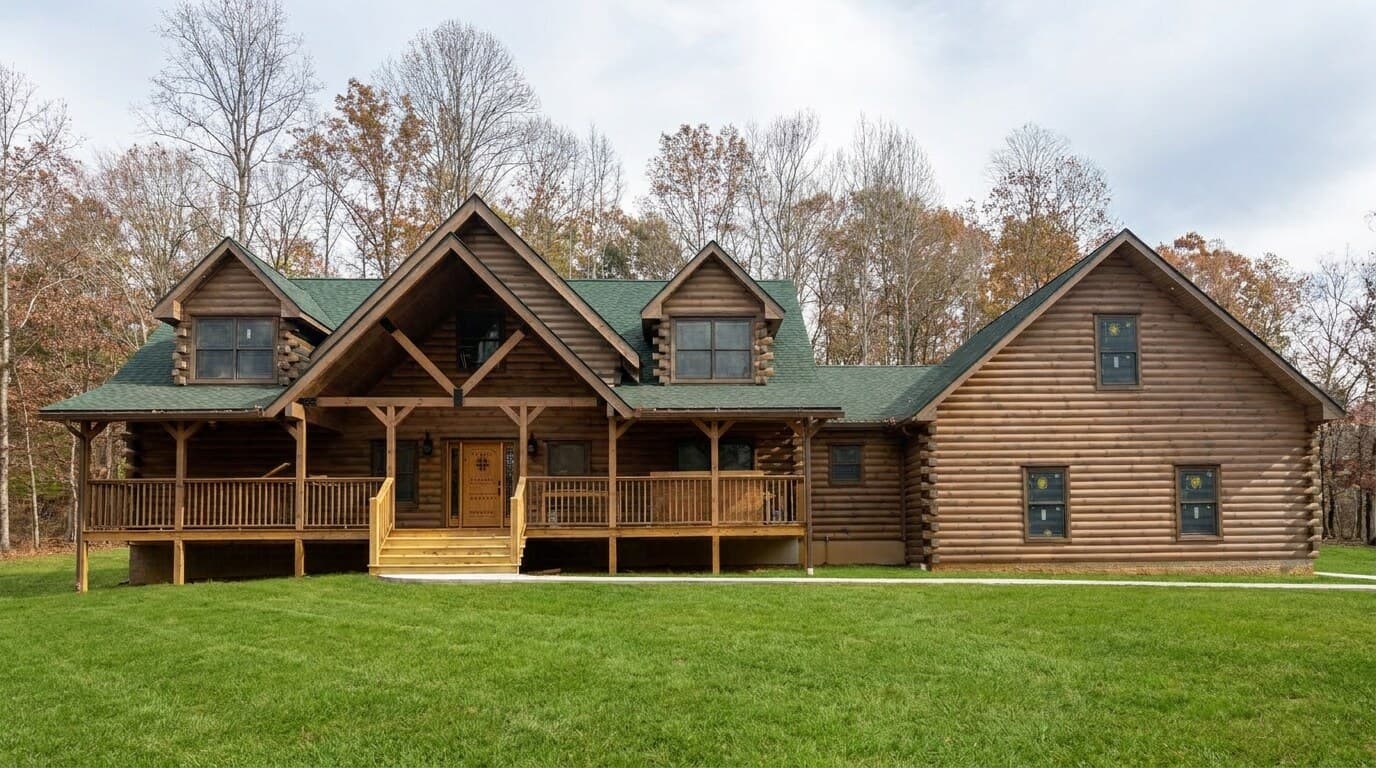
The log home in our gallery shows why. It has a wraparound porch, a green metal roof, a cathedral ceiling with timber beams, and a stone corner fireplace. That kind of interior is hard to recreate with drywall and trim. Every log has its own grain and shape, so no two log cabin interiors look quite alike. Logs also age well. As we put it on our log homes page, a log home built right is "a finished product that gets better looking every decade."
There are practical perks, too. Thick log walls dampen outside noise, so a log house on a busy road or near a neighbor still feels private. Wood is a renewable building material, which matters to a lot of families. And heavy, well-anchored log walls are strong, which helps a log cabin stand up to wind and storms.
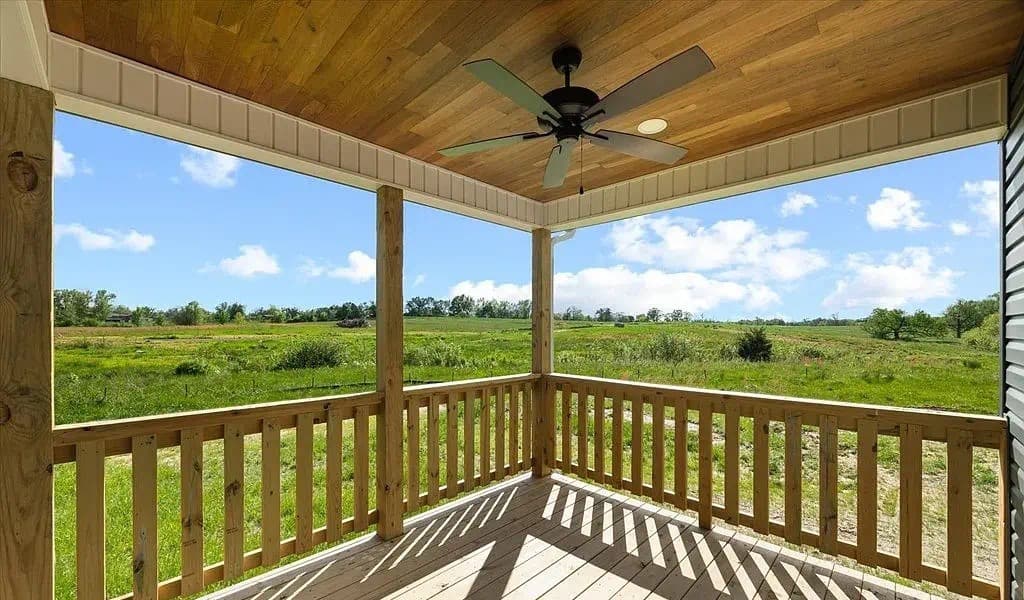
Log homes suit the Upper Cumberland especially well. Wooded lots, rolling land, and long views are common here, and a log house sits on that kind of property more naturally than a typical subdivision home.
Are Log Homes Energy Efficient?
They can be. Wood insulates less than modern insulation (roughly R-1.25 per inch), but a solid log wall stores heat and gives it back slowly. NAHB research found that a log wall rated at a steady-state R-9 can perform about like an R-13 to R-15 framed wall over a year in a temperate climate. Air sealing matters most.
That thermal mass is a real benefit where days and nights swing in temperature, which happens often on the Cumberland Plateau. The walls soak up warmth during the day and give it back in the evening, which helps keep heating bills in check through the winter and can save money over the long run.
Energy escapes through the gaps, not through the logs. Log homes lose most of their heat to air leaking between courses, around windows, and along the roof line. So tight construction, good chinking or sealant, carefully installed windows, a well-insulated roof, and HVAC sized to the house do more for efficiency than log diameter alone.
Are Log Homes a Lot of Maintenance?
Yes, more than a house sided with vinyl or fiber cement. Every so often the exterior needs cleaning, staining, and sealing, and you'll want to look for cracks in the logs (called checking), failed caulk or chinking, and insects. How often depends on sun, rain, roof overhangs, and the finish. Neglect lets small problems become rotting logs.
Tennessee's humidity and rainfall make maintenance non-negotiable. The plateau averages around 55 inches of rain a year, and forested lots stay damp and shaded. A sensible routine to maintain a log cabin or log home looks like this:
- Every year: walk around the outside of the house and look for water stains, soft spots, open cracks along the tops of logs, and signs of insects. Clean the gutters, and trim plants back so they don't touch the walls.
- Every few years: wash the logs and put on a new coat of stain or sealant. Three to five years is typical, though south- and west-facing walls take the most sun, wind, and weather and may need it sooner.
- As needed: repair caulk and chinking, and treat for carpenter bees and other wood-boring insects, which are common in Tennessee. A borate treatment on bare wood before the finish goes on is a common first line of defense.
Design reduces the work. Wide roof overhangs, covered porches, gutters, good drainage, and keeping the bottom logs well above grade all protect the walls. That's what we mean by proper moisture management. Wood species matters too, since some species are more durable and resist decay better than others, and the choice affects decades of upkeep. It's worth talking through before the logs are ordered.
What Is Chinking on a Log Home?
Chinking is the flexible sealant that fills the gaps between logs on homes built with a visible joint between courses. Modern chinking is a synthetic, stretchy material that moves as the logs expand, contract, and settle, keeping out air, water, and insects. Tight-fitting log profiles use caulk or gaskets instead.
Historically, chinking was mortar or clay, which cracked as the logs moved. Today's products bond to the wood and flex with it, which makes a big difference in a climate with real seasonal swings in humidity. If you like the classic look of light stripes between dark logs, that's chinking.
Either way, it's a maintenance item. Inspect it every year and patch it where it has pulled away from the wood.
Why Do Log Homes Settle, and Is It a Problem?
Logs shrink as they dry, so a log wall gets slightly shorter over the first few years. It's normal, not a defect, as long as the house is designed for it. Builders leave settling space above windows and doors, use adjustable supports under posts, and detail stairs and interior partitions so the logs can move.
Drying also causes checks, the small cracks that open along a log as it loses moisture. Most are cosmetic, but checks on the upper side of a log can hold water and should be sealed.
Problems happen when settling is ignored: doors that stick, windows that crack, plumbing and wiring that bind, or drywall walls that buckle as the logs come down around them. Using kiln-dried logs reduces how much settling happens and how much the logs twist or check, which is why we use kiln-dried material whenever possible and build in the right allowances, chinking, and hardware from the start.
Are Log Homes Hard to Insure?
You may have to shop around more. Some insurers worry about fire, even though big solid logs tend to char slowly instead of catching fast. Others worry about replacement cost, since rebuilding takes specialized materials and labor. A rural lot far from a fire station can push premiums up too. Insurers who cover log homes regularly understand them best.
To get a fair log home insurance quote:
- Ask for coverage of the full replacement cost of log construction instead of a generic per-square-foot number.
- Tell the insurer the log species, wall thickness, and roof type, plus your fire protection (how far you are from a fire hydrant and the nearest station).
- A metal roof, defensible space around the house, and updated electrical can all help.
Financing works the same way. Some lenders generally prefer conventional houses, so search for a lender with log home experience early. Get insurance quotes in the planning stage, before you finalize a remote property, so there are no surprises at closing.
Why Are Log Homes Harder to Sell?
The buyer pool is smaller. Some people love log homes while others won't even look at one, and appraisers often have few nearby log home sales to compare. That can mean a longer time on the market. A well-kept log home in a setting that suits it, though, can be a standout listing.
Condition does more for resale than anything else. Logs that look gray and weathered, feel soft, or show any sign of insects send buyers away. A documented maintenance history, a modern kitchen and baths, an open, livable floor plan, and a property that fits the style all keep a log house attractive. Location matters too: a log home on wooded acreage near the lakes or the plateau sells to a very different buyer than one dropped into a suburban street.
How Long Do Log Homes Last?
A well-built log home that's kept dry can last for generations, well over a century in many cases. Tennessee still has log cabins standing from the 1800s. The logs themselves aren't the limit. Water is. Moisture management and regular upkeep decide whether a log house lasts 30 years or 150.
Longevity starts with the build: a solid foundation that keeps logs off the ground, good roof overhangs, flashing done right at every window and door, and gutters that carry water away. After that, it's about catching small problems early. We check back after completion to make sure a new log home is performing the way it should, including sealing and settling.
Is a Hybrid Log Home a Good Compromise?
For many families, yes. A hybrid home mixes log or timber elements with conventional framing. You might have log walls in the great room and framed walls everywhere else, or conventional walls with timber accents. Much of the character stays, while maintenance drops, insulation gets simpler, and some insurance and resale worries ease.
It's a good option if you love the look but are nervous about full log upkeep. Log siding over a framed wall is another alternative that gives a log cabin look with conventional insulation, though real wood siding still needs finish care to avoid warping and rot. For a deeper comparison of full log, timber frame, and hybrid construction on the plateau, see our guide to building a custom log home in Crossville, TN, which also covers log home budgeting.
Is a Log Home Right for You?
A log home is right for you if you love the look and feel, plan to stay a long time, have land that suits it, and are willing to keep up with exterior maintenance. If you want a low-upkeep house or expect to sell in a few years, a conventional or hybrid home may serve you better.
Ask yourself:
- Will you enjoy the maintenance, or at least budget for someone else to do it?
- Is your lot wooded, rural, or scenic, where a log home looks at home?
- Do you plan to stay ten years or more?
- Have you talked to an insurer and a lender who work with log homes?
- Would a hybrid design give you the feel you want with less upkeep?
If most of your answers are yes, a log home can be one of the most rewarding houses you'll ever live in.
Frequently Asked Questions
What's the difference between a log cabin and a log home?
The terms get mixed up a lot. A log cabin is usually smaller and simpler, often a weekend or vacation spot. A log home is a full-size house you live in year-round, with modern systems, a full kitchen and baths, and insulation and wiring that meet code. They're built in similar ways but differ in scale and finish.
What are the common problems with log homes?
You'll most often see moisture damage and rot, insects (carpenter bees in particular), air leaks between logs, and settling trouble around doors and windows. Almost every one of these comes from a design detail or maintenance that got skipped. That's why an experienced builder and steady upkeep matter so much.
Are log homes more expensive to build?
Usually, yes. Materials, specialized labor, and site conditions push a log home's cost above a comparable stick-built house, and a log package price covers only part of the total. The finished cost also includes the foundation, plumbing, electrical, and interior finishing. Our Crossville log home guide walks through the main cost factors, and we'll talk through real numbers for your plan once we've walked your land.
Does S&T Construction build log homes near Cookeville?
Yes. We build full log homes and log cabin additions across Cookeville and the Upper Cumberland. We source quality logs and build with the same attention to detail we bring to every custom home: tight construction and proper moisture management. S&T is licensed and insured under Tennessee contractor license #71564.
Walk the Trade-Offs With a Builder Who Builds Log Homes
A log home is a big, personal decision, and the right answer depends on your land, your budget, and how you want to live. Scott and Tonya would be glad to talk it through with you, including whether a full log, hybrid, or conventional home makes the most sense for your lot.
Contact us or call 931-858-4663 to set up a free consultation. We build throughout Cookeville, Crossville, Sparta, Livingston, Jamestown, and the rest of the Upper Cumberland.
S&T Construction is a family-owned custom home builder and remodeler serving Cookeville and the Upper Cumberland since 2017. Request a free estimate.